
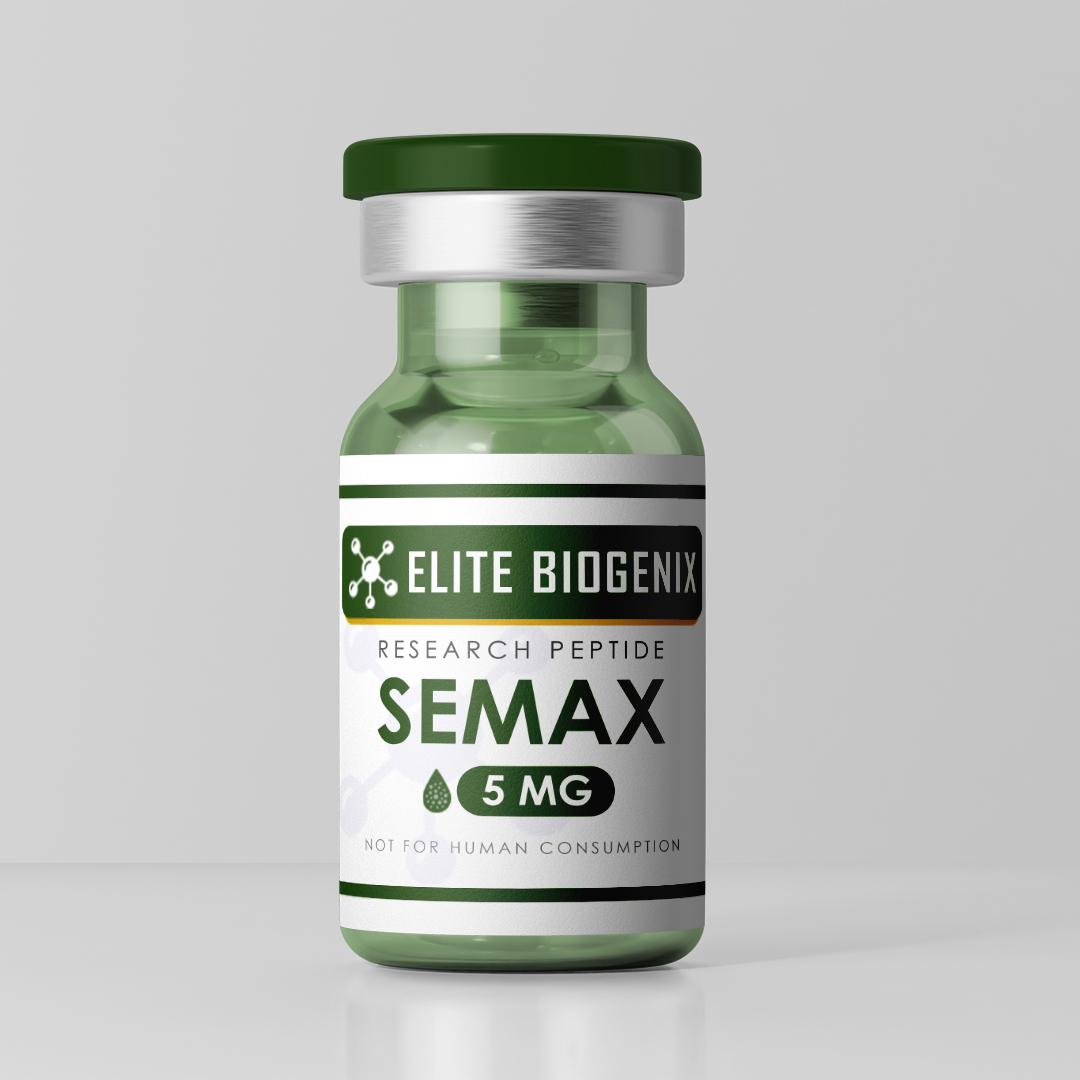
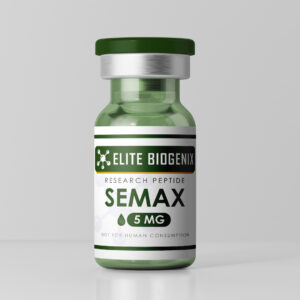
Semax 5mg
$89.99
Semax Research Peptide
For laboratory research use only – NOT for human or veterinary consumption
Premium synthetic heptapeptide for advanced neurological and cognitive research. This highly pure (≥99%) compound is essential for studying:
• Brain-Derived Neurotrophic Factor (BDNF) expression
• Cognitive function and memory formation mechanisms
• Neuroprotection in stroke and injury models
• Stress response and emotional regulation
• Retinal and optic nerve protection studies
Ideal for research applications:
 Learning and memory protocols
Ischemic brain injury models
Neurodegenerative disease research
Ophthalmic neuroprotection studies
EliteBiogenix.com – Premium Research Peptides for Scientific Discovery
Disclaimer: This product is for laboratory research use only. Not for human or veterinary consumption. All purchases require compliance with applicable research regulations.
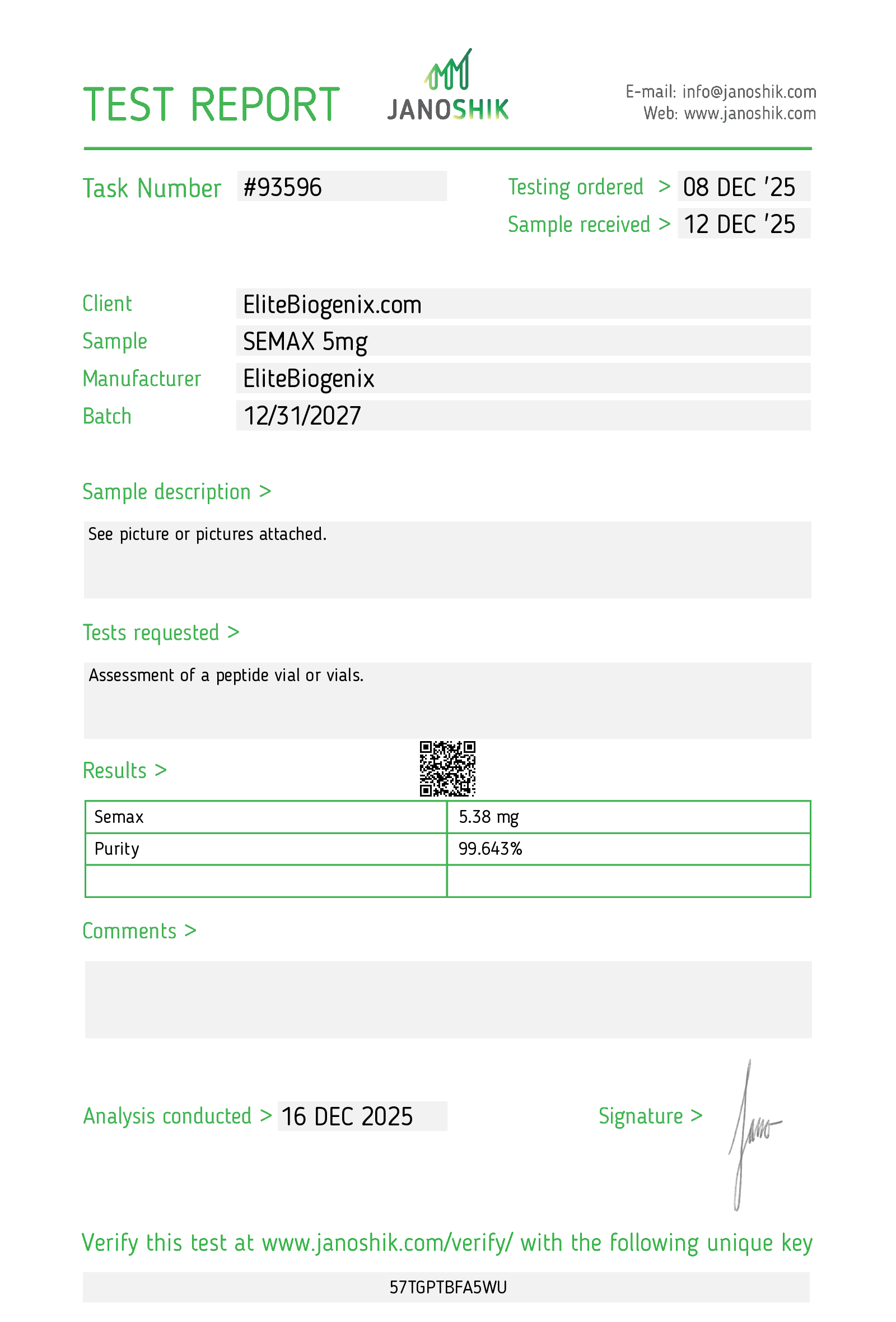
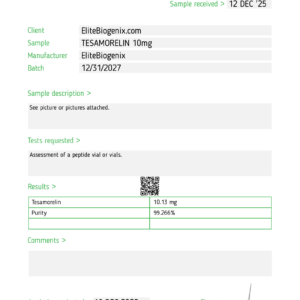
COA: https://verify.janoshik.com/tests/93596-SEMAX_5mg_57TGPTBFA5WU
Description
Semax Research Peptide (99% Purity) –
Premium Synthetic Heptapeptide for Advanced Neurological, Cognitive, and Neuroprotective Research
Welcome to EliteBiogenix, your trusted source for high-purity, research-grade biochemicals. Our Semax Research Peptide is a highly purified, synthetic heptapeptide (Met-Glu-His-Phe-Pro-Gly-Pro) with the sequence identical to a fragment of adrenocorticotropic hormone (ACTH). Originally developed in Russia, Semax has become a cornerstone compound in preclinical neurological research due to its multifaceted effects on cognitive function, neuroprotection, and brain-derived neurotrophic factor (BDNF) expression.
This product is designed and manufactured exclusively for scientific investigation in controlled laboratory environments. It is intended for research purposes only and is not for human or veterinary consumption, diagnosis, or treatment of any medical condition.
CRITICAL NOTICE: This product is sold strictly for research purposes only. It is to be used solely by qualified researchers in controlled laboratory settings. By purchasing this product, you confirm that you are aware of its intended use and will adhere to all applicable local, state, and federal regulations governing the use of research chemicals.
Our Semax is synthesized to the highest standards and undergoes rigorous third-party High-Performance Liquid Chromatography (HPLC) and Mass Spectrometry analysis to ensure ≥99% purity, providing exceptional reliability and consistency for your most sensitive scientific studies on neurological function and cellular mechanisms.
Research Focus: The Multifaceted Neurological Applications of Semax
Semax represents a unique class of research peptides with demonstrated effects across multiple neurological pathways. Its research applications span several critical areas of modern neuroscience:
-
Cognitive Enhancement & Memory Formation: Investigating mechanisms of learning, memory consolidation, and information processing.
-
Neuroprotection & Ischemic Injury: Studying cellular survival pathways during stroke models and other forms of neuronal damage.
-
Neurotrophic Factor Modulation: Researching the regulation of Brain-Derived Neurotrophic Factor (BDNF) and its role in synaptic plasticity.
-
Stress Response & Adaptation: Exploring the interplay between the peptide and the hypothalamic-pituitary-adrenal (HPA) axis.
-
Ophthalmic Research: Examining potential neuroprotective effects in models of optic nerve damage and retinal degeneration.
This 10mg vial of highly pure Semax provides researchers with a reliable tool to investigate these complex neurological processes in controlled in vitro and preclinical models.
1. Semax as a Cognitive Enhancer and Memory Modulator
Mechanism of Action:
Semax exerts its potent nootropic-like effects through several interconnected mechanisms that are of high interest to neuroscience researchers:
-
BDNF Upregulation: Semax significantly increases the expression of Brain-Derived Neurotrophic Factor (BDNF), a critical protein for neuronal survival, differentiation, and synaptic plasticity. This is considered one of its primary mechanisms of action.
-
Neurotransmitter System Influence: It modulates the brain’s dopaminergic, serotonergic, and GABAergic systems, potentially improving attention, motivation, and stress resilience without causing sedation or hyperactivity.
-
Enhanced Brain Energy Metabolism: Research suggests Semax can improve glucose utilization in the brain, supporting the high energy demands of active neurons.
-
Activation of Neuroprotective Genes: It influences the expression of genes involved in cell survival and antioxidant defense.
Research Applications & Key Studies:
-
Enhancement of Learning and Memory: Studies in rodent models have demonstrated that Semax administration can significantly improve performance in various learning and memory tasks, such as passive avoidance and Morris water maze.
-
Study: Nootropic and anxiolytic activity of Semax in rodents
-
Research Dosage: 50-150 µg/kg administered intranasally or subcutaneously, once daily.
-
-
Improvement of Cognitive Function Under Stress: Research indicates that Semax may help maintain cognitive performance under conditions of stress or fatigue, making it relevant for studies on cognitive resilience.
-
Study: Effects of Semax on learning and memory in rats with different levels of anxiety
-
Research Dosage: 100 µg/kg administered subcutaneously.
-
Suggested Research Protocols for Cognitive Studies:
-
Preclinical learning models: 50 – 150 µg/kg administered via subcutaneous injection or intranasal instillation, once daily for 1-4 weeks.
-
Acute cognitive testing: A single dose of 100 µg/kg administered 30-60 minutes prior to behavioral testing.
Best for: Investigating mechanisms of learning and memory, studying BDNF’s role in cognition, and developing interventions for cognitive enhancement.
2. Semax as a Neuroprotective Agent
Mechanism of Action:
The neuroprotective properties of Semax are a major area of scientific interest, particularly in models of acute brain injury:
-
Reduction of Excitotoxicity: It helps protect neurons from damage caused by excessive glutamate, a primary mechanism of cell death in stroke and trauma.
-
Antioxidant Effects: Semax reduces oxidative stress by enhancing the activity of endogenous antioxidant systems in the brain.
-
Anti-Apoptotic Action: It inhibits pathways that lead to programmed cell death (apoptosis), promoting neuronal survival.
-
Improved Cerebral Blood Flow: Studies suggest it can enhance blood circulation in the brain, which is crucial for recovery after ischemic events.
Research Applications & Key Studies:
-
Stroke and Cerebral Ischemia: Semax has shown significant promise in reducing infarct volume and improving functional outcomes in animal models of ischemic stroke.
-
Study: Neuroprotective effects of Semax in a rat model of transient focal cerebral ischemia
-
Research Dosage: 150-300 µg/kg administered intranasally or subcutaneously, starting immediately or shortly after the induction of ischemia.
-
-
Traumatic Brain Injury (TBI): Research indicates that Semax can mitigate damage and improve recovery in models of TBI.
-
Study: Effects of Semax on the recovery of sensorimotor function after traumatic brain injury in rats
-
Research Dosage: 100-200 µg/kg administered daily for 1-2 weeks post-injury.
-
Suggested Research Protocols for Neuroprotection:
-
Ischemic stroke models: 150 – 300 µg/kg administered via subcutaneous or intranasal route, with the first dose given as soon as possible after reperfusion, followed by daily administration for 3-7 days.
-
Neurotrauma models: 100 – 200 µg/kg administered daily via subcutaneous injection for 7-14 days following injury.
Best for: Research on ischemic stroke, traumatic brain injury, neurodegenerative models, and general mechanisms of neuronal survival.
3. Semax in Ophthalmic and Retinal Research
Mechanism of Action:
The retina is an extension of the central nervous system, and Semax’s neuroprotective effects extend to ocular structures:
-
Retinal Ganglion Cell Protection: It may protect retinal ganglion cells from apoptosis in models of glaucoma and optic nerve damage.
-
Anti-Inflammatory Action in the Eye: Reduces inflammation associated with retinal ischemia or neurodegenerative eye diseases.
-
Support of Visual Pathway Function: Research suggests it may help preserve function in the entire visual pathway from the retina to the visual cortex.
Research Applications & Key Studies:
-
Optic Nerve Damage: Studies have investigated the efficacy of Semax in preserving retinal function and structure after optic nerve crush or transection.
-
Study: Neuroprotective effect of Semax in the model of optic nerve injury in rats
-
Research Dosage: 150 µg/kg administered intranasally or subcutaneously daily for 1-2 weeks.
-
-
Retinal Ischemia: Its effects on improving outcomes after retinal ischemic events have been documented in preclinical models.
-
Study: Effects of Semax on the recovery of the retina after ischemia
-
Research Dosage: 100-200 µg/kg administered daily.
-
Suggested Research Protocols for Ophthalmic Studies:
-
Optic nerve injury models: 150 µg/kg administered daily via subcutaneous or intranasal route for 7-14 days post-injury.
-
Retinal degeneration models: 100 – 200 µg/kg administered daily for extended periods (2-4 weeks) to assess long-term protective effects.
Best for: Investigating neuroprotection in glaucoma models, retinal ischemia, optic neuritis, and other neurodegenerative eye conditions.
4. Mechanisms of Stress Resilience and Emotional Regulation
Mechanism of Action:
Unlike traditional ACTH, Semax does not stimulate corticosteroid production but appears to modulate the stress response in a more adaptive manner:
-
HPA Axis Modulation: It influences the hypothalamic-pituitary-adrenal axis, potentially promoting a more balanced stress response without leading to adrenal exhaustion.
-
Anxiolytic-Like Effects: Demonstrates anxiety-reducing properties in animal models without the sedative side effects associated with many anxiolytic drugs.
-
Emotional Behavior Influence: Research suggests it can affect behaviors related to depression and anxiety in a positive way.
Research Applications & Key Studies:
-
Anxiolytic and Antidepressant-Like Effects: Studies in rodents have shown that Semax can reduce anxiety-like behaviors in tests such as the elevated plus maze and open field test.
-
Study: Anxiolytic activity of Semax and its fragments (Same as above, covers multiple effects)
-
Research Dosage: 50-100 µg/kg administered subcutaneously.
-
-
Stress-Induced Cognitive Deficits: It has been shown to prevent or reduce learning and memory impairments caused by various stressors.
Suggested Research Protocols for Stress Studies:
-
Anxiety models: 50 – 100 µg/kg administered via subcutaneous injection 30-60 minutes prior to behavioral testing (e.g., elevated plus maze).
-
Chronic stress models: 100 µg/kg administered daily via subcutaneous injection for the duration of the stress paradigm (typically 2-4 weeks).
Best for: Research on stress physiology, anxiety and depression models, HPA axis function, and emotional behavior.
Research Protocol Considerations
Administration Routes:
-
Intranasal: Preferred for direct nose-to-brain delivery, bypassing the blood-brain barrier. Use a sterile saline vehicle.
-
Subcutaneous: Common and effective for systemic delivery in rodent models.
-
Intraperitoneal: Less common but used in some studies.
Reconstitution and Storage:
-
Solvent: Reconstitute with sterile bacteriostatic water or saline for a typical concentration of 1-5 mg/mL.
-
Storage: Store the lyophilized powder at -20°C. Once reconstituted, store at 4°C and use within a few days to ensure stability, though some studies suggest it remains stable for longer periods.
Sample Study Design (Neuroprotection):
-
Model: Transient Middle Cerebral Artery Occlusion (MCAO) in rats.
-
Treatment: Semax at 300 µg/kg or vehicle control.
-
Administration: First dose intranasally 15 minutes after reperfusion, followed by daily subcutaneous injections for 5 days.
-
Outcomes: Infarct volume (TTC staining), neurological deficit scores, BDNF levels (ELISA).
Why Researchers Trust EliteBiogenix
-
Uncompromising Purity: Every batch is HPLC-tested and verified ≥99% pure. Certificates of Analysis are available upon request.
-
Research-Specific Focus: Our products are designed, labeled, and sold for laboratory use only. We are a trusted partner for academic and institutional research.
-
USA Shipping & Support: Fast, discreet, and compliant shipping to research facilities across the United States.
Order Semax Research Peptide today from EliteBiogenix.com to advance your investigation into cognitive neuroscience, neuroprotection, and BDNF-mediated plasticity.
Disclaimer: These materials are for laboratory research purposes only. They are not drugs, food additives, or for human/veterinary use. The information presented is a compilation of scientific studies and is for educational purposes within the research community. It is not medical advice. You must be 18 years of age or older to purchase. Handle with appropriate personal protective equipment and aseptic technique.
Reviews (0)
Shipping & Delivery
Related products
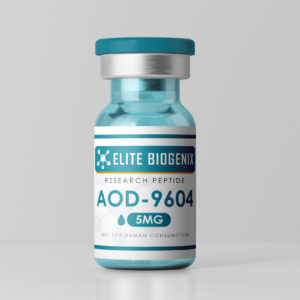
AOD-9604 5mg
AOD-9604 – 5mg
This high-purity synthetic peptide (Tyr-hGH 177-191) is a fragment of human growth hormone designed for metabolic and cartilage research. It is used in-vitro to study lipolysis, adipocyte function, and chondrocyte metabolism without the full mitogenic activity of hGH.
Primary Research Applications:
-
Adipocyte Lipolysis & Fat Metabolism Studies
-
Cartilage Formation & Chondrocyte Research
-
Metabolic Syndrome & Obesity Model Systems
-
Comparative Studies with Full-Length Growth Hormone
Intended for laboratory use only by qualified researchers. This product is strictly not for human or veterinary consumption.
Purity: ≥98% (HPLC Verified) Form: 5mg lyophilized powder Storage: Store at -20°C or below, desiccated and protected from light.
LL-37 5mg
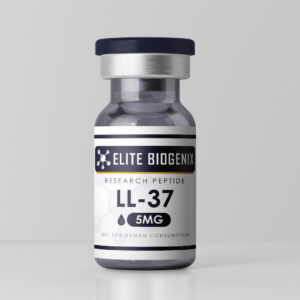
This high-purity human cathelicidin peptide (LL-37) is a multifunctional host defense compound for immunology and cell biology research. It is designed for in-vitro studies of innate immunity, wound healing, and microbial defense mechanisms.
Primary Research Applications:
-
Antimicrobial & Innate Immunity Assays
-
Wound Healing & Cell Migration (Scratch Assays)
-
Immunomodulation & Cytokine Response Studies
-
Angiogenesis & Tissue Repair Models
This 5mg vial of lyophilized powder is intended for qualified researchers conducting laboratory studies only. Not for human or veterinary use.
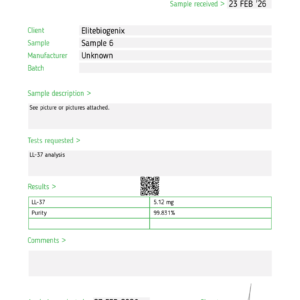
Purity: ≥95% (HPLC Verified) Storage: Store at -20°C or below, desiccated.
SS-31 30mg
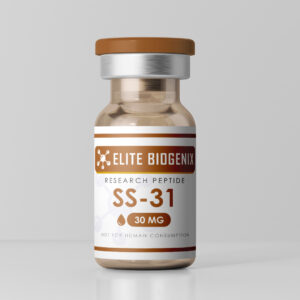
SS-31 (Elamipretide) – 30mg
This high-purity, mitochondria-targeting peptide is designed for advanced cellular research. SS-31 selectively localizes to the inner mitochondrial membrane to protect cristae structure and reduce oxidative damage at its source.
Primary Research Applications:
-
Mitochondrial Function & Bioenergetics
-
Ischemia-Reperfusion Injury Models
-
Oxidative Stress & Apoptosis Studies
-
Age-Related Cellular Decline Research
This 30mg vial of lyophilized powder is intended for qualified researchers conducting in-vitro studies only. Not for human or veterinary use.
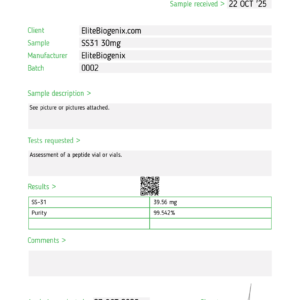
Sequence: D-Arg-Dmt-Lys-Phe-NH₂ Purity: ≥98% (HPLC Verified) Storage: Store at -20°C or below
Reviews
There are no reviews yet.